Wednesday, November 18, 2009

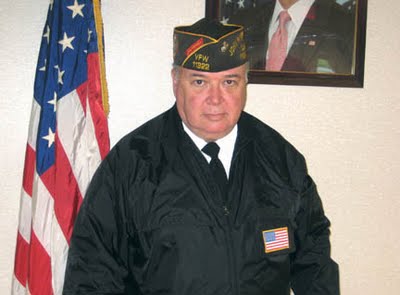
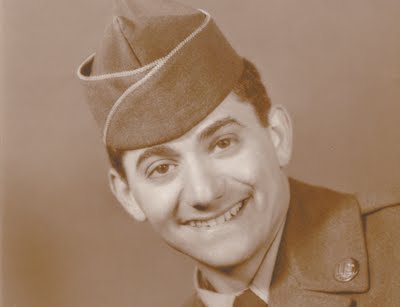
Al Cordisco

Bristolian was a hero for his country and his community.

By Tim Chicirda, BucksLocalNews.com


Not only is Alfred (Al) Cordisco a member of the Bristol High School Class of 1940, but Air Force Staff Sergeant Al Cordisco has served for this country, while serving his community as part of a plethora of different organizations.

Cordisco is a 6-year member of the Robert W. Bracken Post No. 382. In fact, he has committed a total of almost 20 years, including his tenure in the National American Legion Organization.
The Robert W. Bracken Post, No. 382, formed September 28, 1919 with 62 ex-servicemen members, is a supportive group, a social club and a type of extended family for former service men and women.

In addition to organizing commemorative events, such as Flag Day, and marching in the Borough parades, manning a booth on Bristol Day and other volunteer activities, Legion members are active in U.S. politics.

The primary political activity is lobbying for the interests of veterans, including support for veterans benefits such as pensions and the Veterans Affairs hospital system.

One of the signers of the original charter was 1922-23 Commander/ Finance Officer, Jacob C. Schmidt, Jr., the grandfather of Horace P. Schmidt, Jr., owner of Schmidt’s Flowers. Also, Al's late cousin, Vincent Cordisco, directed the Bracken Cavaliers from 1944 to 1946.

Meanwhile, the American Legion was chartered by Congress in 1919 as a patriotic, mutual-help, wartime veterans’ organization.

Cordisco was born the fourth of six children, raised on Lincoln Avenue by his parents from Italy. Father John, a carpenter, married mother Assunta Pascuillo.

Al retired as a mechanic who possessed many skills in technical, electrical and electronic areas.
Cordisco and his late wife, Tullytown resident, Frances (Cuchineal) worked together at Keystone / Kaiser. Their courtship began after meeting at a Fifth Ward dance.

Al had another special bond with the Fifth Ward, as he held terms as both President and Secretary. He also co-founded the club in 1937.

(It merged with the Italian Mutual Aid in 1954 and is now know as the Italian Mutual Aid-5th Ward Association.)

Despite Al's many pre- and post-war accomplishments, one of his greatest life moments came while in the Air Force in the 1940s as the right waist gunner on a B-17 Flying Fortress, the “Feather Merchant,” with a .50 caliber machine gun.

Waist gunners held a very difficult position in the Air Force, as waist windows on the B-17 were open to a 200 m.p.h. and -50 degree slipstream of air. Exposure to this extreme cold for even a few seconds could leave one with a mild frostbite and this cold would also cause ice to form in the oxygen masks of the gunners.

Depsite these difficulties, Staff Sergeant Cordisco was credited with destroying enemy aircraft over Augsburg, Germany. He was awarded an Air Medal with four oak leaf clusters and a Distinguished Flying Cross by General Ira Clarence Eaker of the 8th Air Force High Command, for heroism and extraordinary achievement while participating in aerial flight.

During Cordisco's European Theatre of Operations duty, he was based in Rattlesden, England in the 8th Air Force and flew missions over Germany and France. Here, he partook in a raid over Berlin’s military and industrial targets on March 6, 1944.

According to Al, “I just did what I had to do.” Flight crews had a set number of missions, usually a tour of 30. Al is one of the fortunate 447th Bomb Group, self proclaimed “Lucky Bastards Club,” who rallied forward and returned no less than those 30 times.

But, like so many veterans, Al unsentimentally ventured back to his life after the war, marrying and raising a son, the late BHS grad, Michael Alfred. He also raised a daughter, Wal-Mart employee, Patricia Kervick, who has a son, BHS grad, Michael who currently resides with him.
He is also a member of the Knights of Columbus Council #906.

Al also served as Sixth Ward (East Ward) Borough Councilman from 1956 to 1963. He has been a Democratic Committee Person for the past 25 years and has held Chairman positions on both the Police and the Street and Highway Committees.

Al Cordisco is truly a Bristol Borough legend, devoting his entire life to his country and to his community.

--
Cate Murway contributed to this article.

Wednesday, November 11, 2009

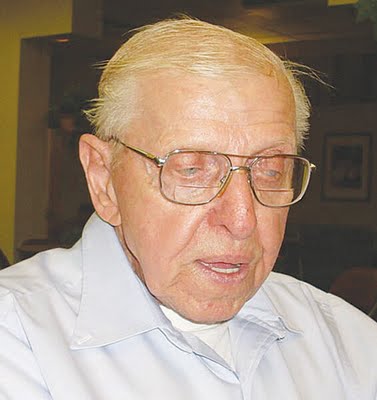
Gene Lioy

“Flying Fortress” gunner recalls harrowing missions.

By Jeff Werner, BucksLocalNews.com

At the age of 84, Bucks County veteran Gene Lioy still shudders when he recalls his harrowing missions over Germany, France, Belgium, and the Balkans during World War II.It was D-Day plus one when then 19-year-old Lioy took off in a B-17 from an airbase in England on the first of what would be about 30 bombing runs between 1943 and 1945.

Their mission was to bomb out ahead of the troops as they swarmed across the French countryside.But his first flight with the 544th Bomb Squadron of the 384th Bomb Group never made it to its destination. Lioy and his crew were forced to turn back when two of the plane’s engines failed.

The plane barely made it home, dumping its bombs into the English Channel before setting back down in England.Subsequent missions into an almost endless barrage of flak would change Lioy’s life forever. Up until that moment he felt invincible.

That changed when the realization of war came rushing home, stealing his youthful innocence away.“It was horrifying,” he said. “I was scared. We all were. I saw planes in front of me blow up with friends aboard. They were gone in an instant -- that’s all, that was it. The flak was exploding all around you. And you never knew if you’d be next.”

As the top turret gunner, Lioy had an almost unobstructed view of the sky, as German Focke-Wulfs and Messerschmitts flew around the aircraft with one mission in mind - to shoot he and his crew from the sky.

Just a year earlier Lioy had been a high school student in the western Pennsylvania town of Altoona, more concerned about girls and teen life than being killed. He graduated from high school in June 1942 at the age of 18. Six months later he was drafted into the service of a nation at war.

The day he left home was emotional. His mother was in tears as her second son prepared to leave for war.

“I will never forget that,” Lioy said. “My mother and grandmother were sitting in the kitchen and there I was - I was going away to war,” he said. “I can still see them crying. It was hard for them to take that. It was hard for me.”

When Lioy entered the service, he was assigned to the air force. For about a year he trained as an airplane mechanic, attending engineering school in Oklahoma and working briefly at a Boeing Aircraft plant where he learned about engines and how they’re put together.

“The next thing I knew, no more mechanic,” said Lioy. “They needed air crew. So there I go - over to Las Vegas where I learned air gunnery. The next thing you know I’m in Oklahoma again where I trained with the crew.”

From Oklahoma, the crew flew to Georgia to pick up a new plane. After a one-day stop over in New Foundland, they were bound for England and the war.

“We were having a good time,” recalled Lioy of those training and pre-war days. “In our minds we never thought of what it could be like. Now when I think of what we did, I’m really scared. But back then you weren’t. You just did what they told you to do,” he said.

Lioy and his crew flew campaigns over Normandy, Northern France, the Rhineland, Ardennes, and Central Europe, dropping bombs on strategic targets -- submarine pens, oil fields, cities, and factories. Their longest mission was to the Balkans, near the Russian border, where they dropped a load of bombs on oil refineries.

Lioy credits the B-17, affectionately known as the Flying Fortress, with saving his life on more than one occasion.

“That was the best plane they ever built,” he said. “The fire power of it was great. It was protected all over, better than the B-24.”

Following Germany’s surrender, the B-17s were transformed into transport planes and Lioy, then stationed in France, helped fly troops home from Germany.

“We took all the guns and bombs out of our planes and it became a troop transport,” said Lioy. “We brought the boys out and dropped them in Marseilles. That was my job until I got out.”

During those transport missions, Lioy saw the damage wrought by the allied bombing campaigns.

“I can never forget Leipzig - just totaled. All you could see was rubble all over,” he said. “It’s a shame we had to go over there and do that. But if we hadn’t of stopped Hitler at that point, the world would be in a very different position today,” said Lioy.

For his participation in World War II, Lioy received the Air Force Medal with two clusters, Good Conduct Medal, America Theatre Service Medal, European, African and Middle Eastern Service Medal and five Bronze Stars.

Following the war, Lioy met and then married his wife of nearly 60 years, Henrietta, in 1951. They made their home in Clifton, N.J., for 32 years, raising two daughters, Janet Lioy, of Upper Makefield, a physician at the Children’s Hospital of Philadelphia, and Linda, a Registered Nurse from Wayne, N.J. Ten years ago, the couple retired to Buckingham Springs.

“At first I never thought too much of it,” said Henrietta, of her husband’s service. “The older I got the more I realized what he went through. And it was hell. “Communism under Hitler’s regime? It would have been horrible,” she continued. “Our life would have been horrible. My husband and the men and women who went over there fought for our freedom and made the ultimate sacrifice. How can we ever thank them?”

Wednesday, October 21, 2009

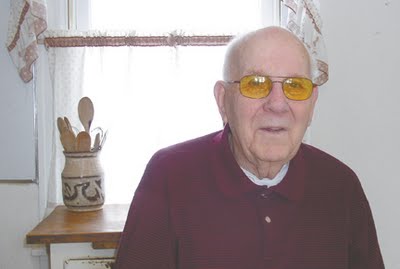
Sanford Kaplan

A teenage aviation hobby turned into a military profession.

By Petra Chesner Schlatter, BucksLocalNews.com


Warrant Officer 2 Sanford “Sandy” Noel Kaplan, 70, served in both the U.S. Air Force and the U.S. Army during the Vietnam War. He flew helicopters in the Army, but surprisingly was not permitted to fly aircraft in the Air Force because he did not have a college degree. However, he was a trained pilot.

Ironically in the Air Force, he taught the use of full pressure suits (space suits).

Kaplan started flying when he was 13 in the early 1950s. He said in those days, you could rent a plane for $35 and your age didn’t matter. He was designing model aircraft before that. Flying was in his blood. It still is.

In his retirement, he spends countless hours in his basement meticulously constructing large model aircraft from as early as the World War I era.

In 2002, Kaplan retired from Dow Jones. He made a career as a professional pilot. “I became their chief pilot and general aviation manager,” he said, noting he flew 26 years and was chief pilot for 13 years.

Today, he prides himself as being a member of the motorcycle group, the American Legion Riders, and part of the committee to build a veterans’ monument in Lower Makefield Township.
In fact, two of his model aircraft will be auctioned to benefit the monument and park at Makefield Highlands Golf Course on Saturday, Nov. 7 from 7 to 10:30 p.m.

The aircraft, a Mohawk and a Sky Raider, are both hand-painted by Kaplan in Vietnam color and markings. Other models constructed by Kaplan were donated to museums. The first model he donated was valued at $10,000.

Looking back, Kaplan said he enlisted in the Air Force “to avoid the draft.” He was with the Air Force for 2 1/2 years. “My profession was physiological training instructor,” he said. “You teach essentially space suits, ejection seats, parachutes, oxygen equipment, low pressure chambers and hyperbaric chambers.

“One of my students was a general in the Army,” Kaplan said. He knew of Kaplan’s flying experience, and that he had all of the credentials and certification prior to the Air Force.

The general offered Kaplan a “job” in the Army as a pilot. “One day I was an Airman 2nd [with two stripes] and the next day I was in the Army as a warrant officer,” he said, chuckling. “Specialized officers have only one specific job. In my case, it was Flying/Warrant 2.
“I flew helicopters when I was in the Army,” Kaplan said. “I [had told the Air Force that] I was an airplane pilot, but they ignored that. That’s typical military stuff.”

He had joined the Air Force “to stay away from what they called the grunt army which was infantry – carrying a rifle.

“I agreed in doing whatever they told me to do,” Kaplan said. “All I knew was I wanted to fly...Essentially, I volunteered in the Army under the direction of this general.”

Kaplan remembers the Battle of Ira Drang Valley in November 1965. “It was probably one of the first large battles that we encountered the Vietnamese army,” he said. “That was probably the most notable battles that they had in Vietnam. The 1st Air Cavalry was interested in getting into battles. They made a mistake going in prematurely.

“The 52nd Aviation Batallian had to rescue the 1st Air Cavalry and in short we got our butts shot off,” he said. “That battle is when I received my order that I could go back to the United States. We were all required to serve 12 months in Vietnam and mine was completed in ‘65.

“When I first went into Vietnam, we were doing one combat mission a day,” he noted. “When I completed my tour in Vietnam, we were doing three a day — all kinds of ground fire. The activity picked up substantially.

“We did what we were supposed to do — either single ship missions or full-company which was 25 helicopters,” he continued. “We brought troops in. We used armed helicopters...We shot up the ground.”

The enemy, the Viet Cong, “kept their heads down...They wouldn’t ‘raise their heads’ to shoot back at you.”

From time to time, Kaplan flew as a Medivac pilot. “Just bringing out the wounded and dead Americans was not only very sad, but it made you feel like you were accomplishing something,” he said.

Kaplan said he is “absolutely” patriotic. “Part of it is I was in the military and you form relationships,” he noted. “They call it comeraderie with other pilots or GIs. Because of the threat of harm each and every day, it’s a very special relationship. You feel very proud to be one of the group who serves their country.”

Wednesday, October 14, 2009

Larry Kerwood

Penns Park man trained Afghan soldiers to fight against the Taliban.

By R. Kurt Osenlund, BucksLocalNews.com

Photo courtesy of Larry Kerwood.

Larry Kerwood is a fine exemplar of “practice makes perfect.” Or, at the very least, “practice makes effective.” After enlisting in the National Guard in 1982, the Warminster-born, William Tennent High School grad spent roughly 20 years serving in a handful of infantry units and bouncing around to various army bases along the East Coast. During his regular Guard duty (which typically consists of one weekend per month and two weeks per year), Kerwood frequently trained with active duty units at Fort Indian Town Gap in Lebanon, Pa., and engaged in what he calls “Army hand-me-down stuff” like running training modules with limited resources. While climbing the ranks from his initial status as an E1 private, Kerwood participated in his fair share of flood, hurricane, and snow storm relief efforts, but never saw any real military action. That is, until Sept. 11 arrived and changed the world.

“For the first 20 years of my military career, it was like practice,” Kerwood, 45, says. “Then, after 2001, I was ready for the big game. My superiors had always tried to instill in me how important my training was, but (Sept. 11) was when I truly realized it had been for a reason and that it was time to put it to use.”

In 2002, Kerwood, who'd been busy conducting the training programs designed by his commander, was put on active duty in Philadelphia, assigned to run a family assistance center for soon-to-be-deployed soldiers and their loved ones. For two years, he helped to support troops headed for Bosnia, Kosovo, Iraq and Afghanistan, while also providing their spouses, significant others and children with comfort and counsel. Kerwood says that during his stay, the center offered assistance to families dealing with anything from financial hardships to relationship issues, and also helped soldiers find or reclaim jobs upon returning to the U.S.

“Any problem you could think of, really – we were there to help,” Kerwood says.

That desire to help would soon become a running theme of Kerwood's military service. In 2004, an opportunity arose for Kerwood to go to Afghanistan. He seized it and volunteered. By that time, he'd become the superior to other troops and enlistees, and his lack of overseas field experience wasn't sitting right with him.

“I thought, 'it's my turn to go,'” Kerwood says. “If I'm leading troops, I should have the same experience in the combat zone. I planned on staying (in the service), and I couldn't be a leader without leading from the front.”

Kerwood's mission landed him in an Embedded Tactical Training (ETT) team, a small group of soldiers who were charged with training members of the primitive Afghan National Army on how to effectively combat a common enemy: the Taliban. Only in its second year of existence at the time, the ETT program required that the American soldiers live among the Afghanis in remote, dangerous places like the Herat Province and Kandahar, both of which Kerwood inhabited. There was no military base. No sanitary conditions. No runnning water. The only things the Army gave to Kerwood and company were M-16 ammunition and money to purchase food, fuel and other supplies.

“The Army told us, 'as far as you're concerned, you're part of the Afghan army now,” Kerwood says.

Supporting themselves and living in mud huts, Kerwood and his fellow soldiers – including two interpreters – began teaching the Afghanis hygiene, discipline, marching, weapons usage, you name it. Kerwood says he was mainly the mentor for the local military's Command Sgt. Major, and as he and his men moved from unit to unit, he also worked with the the army's battalion commander, medical officer and supply officer.

One of Kerwood's first responsibilities after arriving in Afghanistan was to help break up a tank battle between two warlord groups, who were successfully appeased. He also trained the Afghan soldiers on how to conduct weapons searches, find smuggling routes, raid villages and look for Taliban terrorists. He'd then accompany the soldiers on their missions as an advisor. In addition, Kerwood and his ETT team members presided over weapons collection sites, where “acres” of found and surrendered guns and ammo would be gathered to be destroyed.

Kerwood says that by the end of the year he spent in Afghanistan, he saw a huge improvement in the Afghan army.

“When we got there, they didn't want to wear their uniforms,” Kerwood says of the Afghan soldiers. “When we left, they were proud to wear them. We kept increasing their abilities to conduct themselves as soldiers within a unit, and then a unit within an army. A lot of them joined to see change because they hated the Taliban. This was their way to change something. We felt as though our mission had been accomplished.”

Kerwood's tour ended in late July of 2005. He came home, and not long after, as his 25th year with the military was approaching, he retired. He still follows the progress of the army training in Afghanistan, as other ETT team members have followed in his footsteps. He's able to devote more time to his job as a medical researcher with Bristol Myers-Squibb in Lawrenceville, where he's been employed for the last 18 years. He's able to see more of his wife, Sandra, to whom he's been married for 24 years. The couple has two sons, Andrew and Sam, who are both off at college.

Throughout his time in the military, Kerwood was awarded a Combat Infantryman Badge, a Bronze Star (for a rocket attack rescue), Army Commendation with Valor, a Meritorious Service Medal, an Afghan Campaign Medal, a Global War on Terrorism Medal, a Good Conduct Medal and a Humanitarian Service Medal, which was earned for his volunteer involvement with a Hurricane Katrina relief operation in a city just north of New Orleans.

Shortly after retiring, Kerwood says he considered returning to active duty, and then, he reconsidered.

“I thought about re-enlisting,” he says, “but I also thought, 'I like being home.'”

Wednesday, October 7, 2009

David Wood

Army sergeant returns home after three tours of duty in Iraq.

By Matthew Fleishman, Yardley News Editor


After finishing up his third tour of duty in Iraq, Sgt. First Class David Wood was welcomed home with a gathering of family and friends at the VFW Post 6393 on Sunday, Oct. 4.

For the previous 13 months, Wood was part of an 11-man Military Transition Team (MTT), which had the job of training the new Iraqi military force on how to protect their country from insurgents.

While Wood has seen action all around the world, and made 93 paratrooper jumps, he said that “dumb luck” was the reason he was able to make it home to his family this time.

“There was a 10,000-pound truck full of explosives that got into the camp that morning,” said Wood. “It came through the gate and wouldn’t stop. Rounds were fired at the truck to stop the driver, but the explosives were on a timer and exploded.”

Wood said that five Americans and nine Iraqi trainees were killed, and three buildings were completely leveled in the explosion.

“Our 11-man team was supposed to be there that morning,” said Wood. “It was just dumb luck we weren’t there because we had to do maintenance on our vehicles that morning so we decided to do the training in the afternoon. It blew up right where we would have been.”

Wood’s first tour of duty in Iraq occurred during the first Gulf War, in which he was assigned to work convoy security, helping protect convoys heading from Saudi Arabia to Kuwait.

In the second tour of duty, Wood made a jump into Iraq on March 26, 2003, less than a week into the invasion.

“I had just completed jumpmaster school, and we got the alert,” said Wood. “We didn’t know if we were going to make the jump because of a storm, but there was a two-hour window and we made the jump into Northern Iraq to seize an air field. We were supposed to be there for 30 days, but it wound up being 14 months.”

In between his first and second tours of duty in Iraq, Wood made a jump into Kosovo to seize and air field near the Serbian border.

“We jumped onto a snow-covered mountain, did our job, and then jumped on a helicopter and were sent out on patrol on a different mountain,” said Wood.

In his most recent tour, Wood and the rest of his MTT unit were supposed to be stationed in Baghdad, but because of the improvement in safety in that area, and the increase in violence in Mosul, the unit was sent to the area with the greatest need. Wood’s unit taught the Iraqis how to properly clear buildings, search vehicles and plan out operations.

“When we got there, there would be flare-ups four or five times each day,” said Wood. “It’s now once or twice per day. The police are doing a much better job because of our training.”
Now that Wood is home, his family could not be happier.

“It’s awesome!” said Colleen, David’s wife. “We’re truly blessed to have him back once again. He returned to us mentally and physically sound, just as when he left.

“It’s been very hard for us,” continued Colleen. “The one part that has always made it easier is that no matter what he was doing or where he was, he has never missed a birthday or holiday because he always sent us a card to tell us that he was okay.”

After 17 years of marriage, David and Colleen, along with their three children, are going to be stationed near their families, at Fort Dix, N.J. The family has lived in Italy and Germany, in addition to having been stationed around the United States.

“This is the first time they have been close to home,” said Bob Baxter, David’s father-in-law. “Having them at Fort Dix is wonderful.”

Now that Wood is home, he is hoping he won’t have to go on another tour of duty overseas, but due to a potential promotion, he might have to make one last tour. In the meantime, he said that he is enjoying being with his wife and their three sons.

“It’s incredible!” said Wood. “After being away from them for almost 19 months, it’s great to be back. It’s also great being stationed up north. I was able to have a long visit with my dad for the first time in nine years.”

Wednesday, September 23, 2009

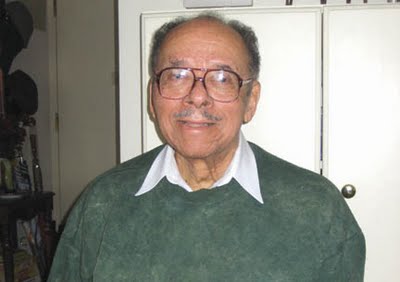
Joseph Cuttone

Bristolian finds new calling after Naval discharge.

By Tim Chicirda, BucksLocalNews.com


One of the most impressive things about many of the veterans profiled on this page over the past years is the fact that many of them did not let their military career define them.

These noble defenders of freedom eventually all come back to being a regular "civilian" sooner or later. And, making that transition from the battlefields to the business and/or working world should truly be applauded.

Soldiers need to adapt back to normal life and no one has done so with more success than Bristol Borough's own, Joseph Cuttone.

Cuttone's military career was very short. In fact, in the early part of the second world war, Cuttone was a turret lathe operator, which is a form of metalworking lathe that is used for repetitive production of duplicate parts, at the Hunter Manufacturing Company.
There, he also performed the duties of staff photographer for their newsletter, the “Hunter Projectile.”

Joseph was drafted in 1943 to the Navy Seabees, the Construction Battalions of the US Navy, and was sent to Williamsburg, VA.

This is where his military career outlook became very bleak. As Cuttone entered the service, he no sooner entered then he had to leave.

Joseph received a medical discharge from the Navy because his “eyes were not good enough” and it prohibited him from performing some of the required duties.

While the armed forces were sad to see him go, the Bristol Borough community were thrilled to welcome a future local staple into town.

The 92-year-old Cuttone remembers his early days in Bristol, a town that barely resembles the modern version that we are all accustomed to seeing today.

“When I was a kid, Bristol was not what it is today, there was lots of open land," said Cuttone. "I was raised on goat’s milk and most of the food that we ate was raised in our yard.”
Joe’s dad, Andrew, was a farmer and his mother, Francesca, worked at the [Keystone] Steel’s Woolen Mill. Cuttone helped his parents, by kneading the bread and collected eggs from the hen house and picking the best good green grass for the goats so the milk was richer.

“When my dad said something, I listened.”

Right around the time Cuttone's life was uncertain with his military, something great happened: Joe met his wife, Catherine R. Vitale, at a picnic in New Jersey. Their first date was sharing a sundae in an ice cream parlor in Camden.

Catherine died just last year, only a month before her and Joseph's 66th wedding anniversary.
So after marriage, Cuttone attempted to enter the political world. Joseph ran for public office as Fourth Ward councilman, five times. He also for the School board and as tax collector. His cousin, Anna Bono Larrisey, is the current Borough tax collector. Anna’s grandfather and Joe’s grandmother were brother and sister.

But, Cuttone's true calling was yet to come.

Joseph now runs an old-fashioned barbershop.

Barber Cuttone learned his trade in Brownie’s Barber School in Trenton. He cut Senator Joseph Ridgway Grundy’s hair there, in fact. This has now been his career for over three quarters of a century.

Joseph has been barbering for almost 75 years and continues to do what he loves.

So much for that eye problem, as Cuttone has continually performed a great service to many generations of Bristolians.

Cuttone also gave much of his time back to the community in other ways.

"Joe was on the committee of the Columbus 500 organization and we did several projects together," said local sculptor Joe Pavone. "We produced an Italian Immigration documentary film and Joe played a very important part, very verbal and such a keen memory. He is really a Bristol Borough character."

***
Cate Murway contributed to this piece.

Wednesday, September 16, 2009

Cora Wehmeyer Henderson

Newtown woman was a pioneer during World War II.

By Petra Chesner Schlatter, BucksLocalNews.com


U.S. Air Force Senior Master Sergeant Cora Wehmeyer Henderson of Newtown was one of the first women to enlist in the Armed Forces at the time of World War II.

At age 90, Cora thrives on being independent. As she talks about her time in the service, Cora does so with great detail. She sits at her kitchen table, showing vintage photographs of her as a WAC (Women’s Army Corps.) Before the WACs, she explained, there was the WAAC (The Women’s Auxiliary Army Corps).

“I’m probably one of the only ones who are still alive,” Cora joked.

What strikes you about Cora is her keen memory. People find her to be witty and intelligent. She has been described as “a remarkable woman.”

Cora made a career of the Air Force, serving more than two decades and retiring as a Senior Master Sergeant.

In her collection of memorabilia, Cora has a copy of a 1951 Parade magazine cover. She is one of four in uniform, along with three other women, each from a different branch of the service.
“I was with the first group of enlisted women,” Cora said. She was working at the former Budd Company’s Wheel and Locomotive facility in Philadelphia. Budd later became a defense plant.
“We were painting Bazooka guns. You wore a mask and overalls. I worked the swing shift – 3 to 11,” she said.

Cora had read in the Philadelphia Bulletin that an organization for women in the military was forming. “The first day you could apply, I was down there,” she recalled. “People thought I was crazy. My pay was $21 a month in the service.”

She went in as a private first class. The women officers, who had gone to college, went to training first. “They had to train us,” she explained. “We were sworn in September, 1942.” Basic training, which took four weeks, was in October 1942 in Des Moines, Iowa.

During her first assignment, she lived in a hotel in Miami, Fla. “We were with an aircraft warning service in November 1942.

“In March 1943, we went to Orlando to the Army Air Corps Base where the work had to do with training fighter pilots,” she remembered.

Next, it was overseas to England with the 8th Air Force until V.E. (Victory in Europe) Day in May 1945.

“I was in communications,” she noted. In a picture, she is sitting with three other “operators.” These women were connecting teletype machines with the bomber bases in England.
She worked in an underground facility right outside of London. She described it like a switchboard. There was another one for the Prime Minister. “We were in the one at High Wycombe,” she said. Her shift started at 11 p.m. and ended at 7 a.m. “We kept rotating,” she noted.

Cora would later become the base chief operator at the telephone exchange at Eglin Base in Florida because she had some practice on a switchboard.

One of her favorite pictures is of her receiving a commendation medal. “They gave me a review,” she said. “I was escorted up to the presenting officer.” A general pinned the medal on her.
“After we won the war, I was shipped to Germany. The only way we could stay in was civil service. Six months later, they wanted us back in,” she maintained.

“They needed help with the demobilization [in 1945] – that’s why I went back in,” she said. She worked in administrative training and recruiting.

For four years, Cora worked at the Pentagon as an administrative assistant to the director of the Women in the Air Force (WAF).

She continued climbing the ladder. One of the rungs was working in Baltimore at the Third Army recruiting headquarters. She served there from 1948 until 1950 and later transferred to Philadelphia as a recruiter, where she was stationed until 1952.

Next stop was Weisbaden, Germany and in 1954 she went to San Antonio, Texas. Then, it was time to head back to Pennsylvania where she could live in Hatboro to be with her mother.
The next assignment took her to McGuire Air Force Base. Going there was a major turning point in her life, Cora noted. “I met John,” she said of her late husband. They were married in the chapel on the base. Three hundred people attended.

Cora is a charter member of the Women in Military Service for America Memorial, which is located at the entrance to Arlington National Cemetery.

When the memorial was dedicated in 1998, people came from all over the country. “It was quite an event and I was lucky to be there,” Cora said.

Because of the memorial, people will be able to see her military history on the computer for years to come.

She likes that idea.